
Timing
When water appears and whether the pattern is changing.
Commercial Properties · Flagstaff Region
We investigate and repair commercial roof leaks in Flagstaff. Tell us where water appears and when it happens; we use that history with the roof inspection to work toward the source and a specific repair.
Water may travel through the assembly before becoming visible inside. A stain near a ceiling grid or wall junction does not establish the roof entry point by itself. We compare the interior report with roof details, nearby equipment and the timing of the leak. That gives the investigation a useful starting point.
Note the affected room or bay, the date and whether the leak follows rainfall, melting snow or equipment operation. Photographs taken safely from inside can help explain changes. Include previous repair invoices when available. A recurring leak and a new isolated drip may need different investigation, even if the visible stain is small.
When water appears and whether the pattern is changing.
Interior observations mapped against roof features.
A defined repair, any further investigation and clear follow-up notes.
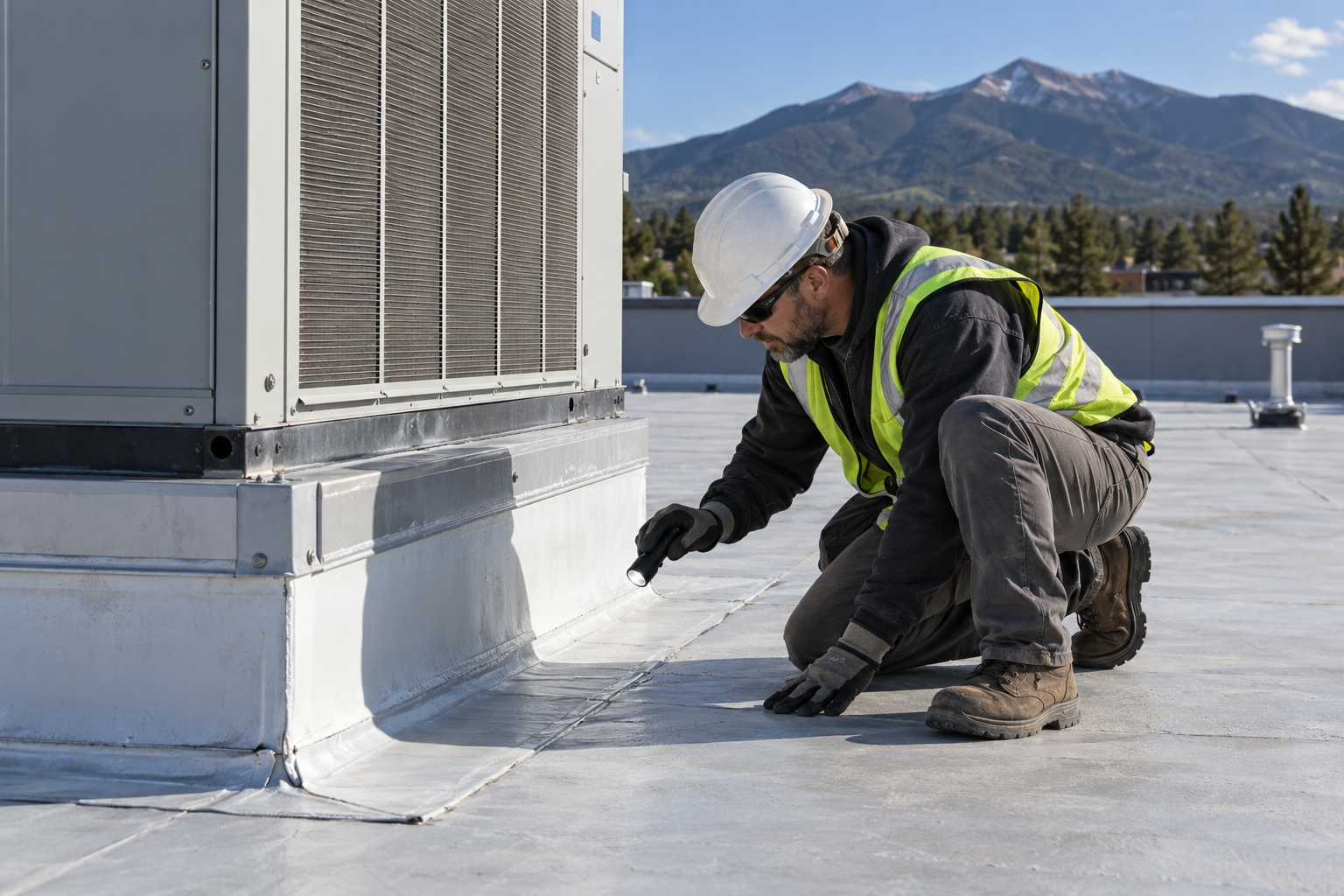
The roof inspection may include seams, penetrations, drains, wall transitions and equipment curbs. Water near rooftop equipment can also require coordination with a mechanical contractor. Condensation and other building conditions can resemble a roof leak, so the repair recommendation should explain the evidence for the suspected source.
Temporary measures and a permanent roof repair serve different purposes. If an interim measure is appropriate, its limits and the follow-up work should be clear. Permanent repair still depends on access, substrate condition, compatible materials and suitable installation conditions. We do not promise that a quick surface application resolves hidden moisture or every possible water path.
Record the repaired location, work performed and any areas still under observation. If water returns, those details help distinguish a new defect from the earlier issue. Interior finishes may also need separate attention; a roof repair scope should say whether that work is included or handled by another trade.
A return visit starts with what changed. Did water appear at the same ceiling tile, spread to another room or show up under different conditions? Keep those observations with the earlier repair record. They help us compare the current problem with the work already completed.
If a previous repair did not resolve the leak, tell us what was done and when. We can review that area without assuming it is the only possible source. Where the cause remains uncertain, we explain what further investigation would involve before treating another patch as the answer.
For a shared building, use room names, unit numbers or bay numbers that everyone recognizes. A simple floor plan can bring several reports together. Note whether the water is an occasional stain or an active drip, and whether it changes during a storm.
The first call does not need to be technical. You can say, for example, that water appears by a particular window during rain and stops afterward. We will ask follow-up questions and discuss inspection arrangements. Stay in an accessible interior area when gathering information; there is no need to investigate the roof yourself.
Choose a building contact to collect new observations and pass them on. They do not need to diagnose the cause. A date, interior location and description of what changed are enough to start the follow-up conversation. This keeps separate reports from being lost between the occupant, maintenance staff and the person who arranged the original repair.
Yes. Water can move within a roof or deck assembly before it enters the occupied space. An interior stain is useful evidence but does not locate the entry point with certainty.
Your leak history and interior photographs can still help. A dry inspection may identify defects; if it does not explain the source, further investigation should be discussed rather than guessed.
Call to discuss current availability and the building’s situation. We can discuss inspection timing once we know the location and what is happening.
It is possible. Moisture associated with equipment operation or building conditions may need evaluation alongside the roofing. We avoid assuming every interior drip has the same cause.
Record the affected location and timing from a safe area, and contact the responsible building manager. Keep people away from damaged ceiling areas or water near electrical equipment; do not access the roof to investigate yourself.
Tell us what is happening at your commercial property. We can discuss the inspection and the next step toward an estimate.
Get A Free EstimatePrefer to call? (928) 438-8009