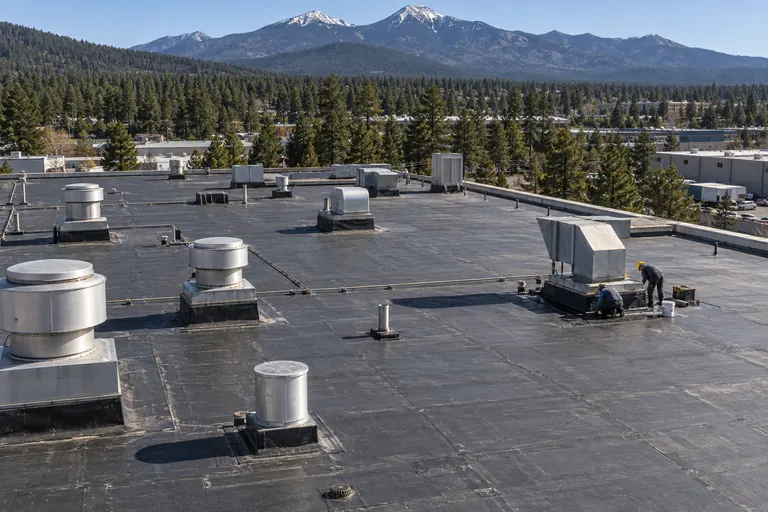
Industrial Roof Repair
Plants with metal roofs add exhaust fans and curbs to the fastener and lap work, and repairs are timed around equipment shutdowns.
Industrial roof repair
We handle commercial metal roof repair in Flagstaff: backed-out fasteners, dried panel laps, rust at cut edges and screw holes, and brittle skylight panels on shops, warehouses, and plants.
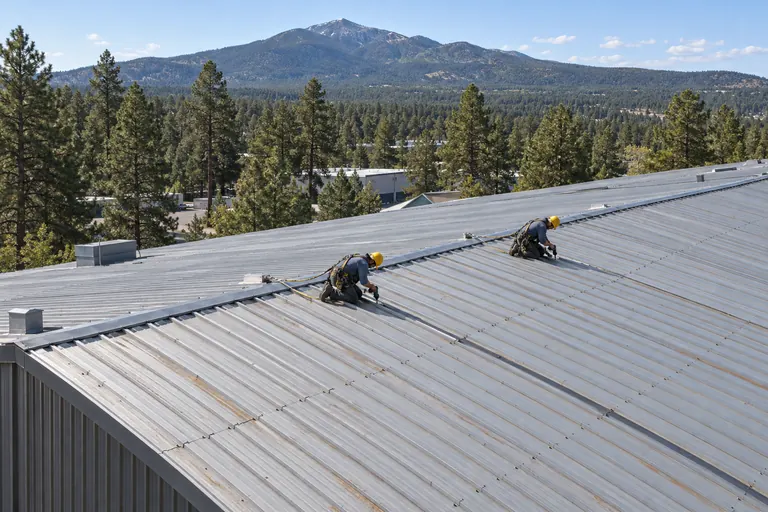
Metal roofs take repairs well while the panels are solid. Widespread rust through the steel changes the answer.
Metal panels move every day as the sun heats them and the night cools them. That movement works these five details loose first.
Screws back out as panels expand and shrink, and their washers crack. Each loose screw is replaced with an oversized fastener and a new washer that seals the enlarged hole.
Side and end laps leak when sealant dries out and meltwater wicks under the upper panel. Laps are opened, cleaned, and resealed with butyl tape or sealant rated for metal.
Rust starts where coating was cut or scratched: panel ends, drilled holes, and spots where tools slid. Early rust is cleaned to bright metal and treated before it eats through.
Translucent panels turn brittle and crack after years of high-altitude sun. Replacements are matched to the rib profile and sealed into the sidelaps on both sides.
Ridge caps and eave closures loosen in wind and let snow drift inside. Closures are replaced and caps refastened so the ends of each panel stay sealed.
Each repair targets one failure on the panels. Several are often done on the same visit.
| Repair | What It Fixes | Season |
|---|---|---|
| Fastener replacement | Backed-out screws and cracked washers | Winter on cleared panels |
| Lap resealing | Leaks at side and end laps | Dry days above freezing |
| Rust treatment | Surface rust at edges and holes | Warm, dry weather for coating |
| Skylight panel swap | Cracked or brittle translucent panels | Calm, dry days |
Small metal roof problems stay small when they are caught early.
Rust treated at the surface stops before it perforates the steel. Once holes form, the panel itself has to be replaced instead of cleaned and sealed.
Replacing loose screws keeps panels pinned to the purlins. Panels that move freely tear their own holes larger and let meltwater run along the fastener line.
Many metal buildings carry blanket insulation under the panels. Water from a leaking lap soaks it and drips onto stock and equipment long after the storm.
A replaced skylight panel lets light in again without the drip. Cracked panels also let snow in, which melts onto whatever sits below.
Call and tell us whether the drips follow a line of screws or a lap. That detail points the inspection to the right part of the roof.
Metal roof repair moves panel run by panel run, with access and safety set up first.
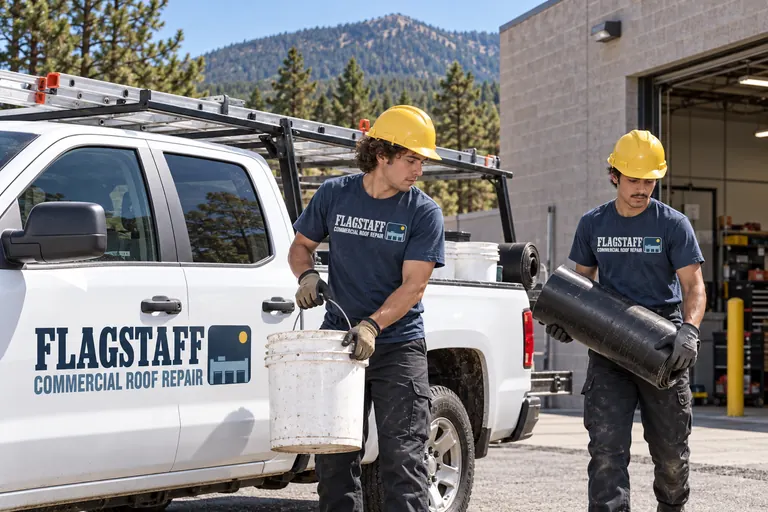
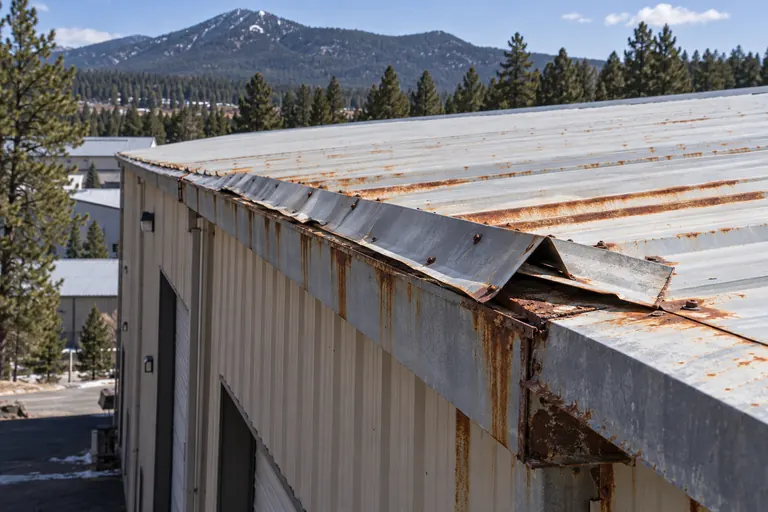
Fastener lines, laps, ridge caps, and skylight panels are checked run by run, with photos of rust and loose screws. Snow and ice are cleared before anyone walks the panels.
Ladders are tied off, a warning line goes up at the edge, and any area under a skylight is cleared of people while work happens above it.
Each loose screw comes out and an oversized fastener with a new washer goes in, sealing the enlarged hole and pinning the panel back to the purlin.
Laps are opened and resealed, rust spots are cleaned and treated, and cracked skylight panels are replaced with ones matched to the rib profile.
On a dry day or after a storm, the underside is checked for new drips along the repaired runs, and any remaining spot is traced back up.
Metal roof repairs often lead to these two services.
Plants with metal roofs add exhaust fans and curbs to the fastener and lap work, and repairs are timed around equipment shutdowns.
Industrial roof repair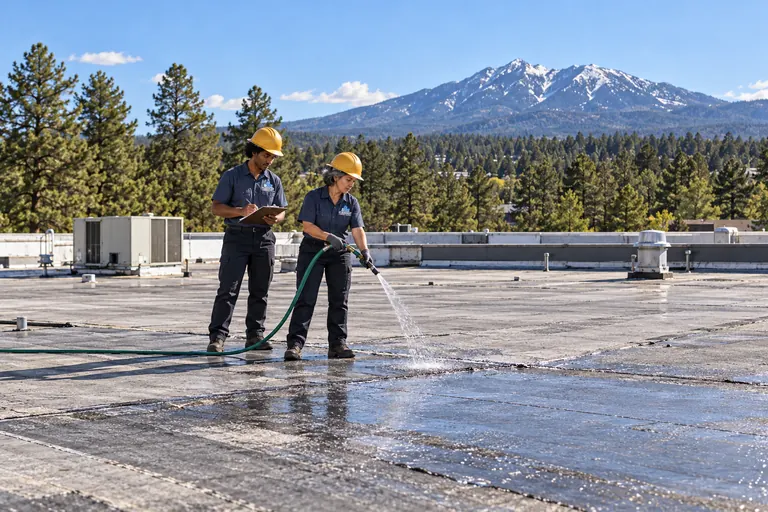
A drip far from any loose screw can mean water is running along a purlin, so leak tracing finds the real entry point.
Commercial roof leak repairAnswers about fasteners, laps, rust, and skylights on Flagstaff metal roofs.
Fasteners, laps, and openings fail first. Screws back out as panels expand in the sun and shrink on cold nights, lap sealant dries and lets meltwater wick under the upper panel, rust blooms at cut edges and holes, and skylight panels turn brittle and crack at the sidelaps.
Because the original hole has been worn larger by panel movement. A screw of the same size spins in the enlarged hole and leaks again. An oversized fastener grips fresh metal, and its new washer seals the opening.
Surface rust can, when the steel underneath is still solid. It is cleaned, treated, and coated. Rust that has eaten through the panel needs a new panel, or a patch panel lapped over the area on a low-pitch run.
Yes, on metal buildings it happens often. Warm, moist air inside meets cold panels and drips on cold mornings even when the roof is tight. Drips on cold, dry days that follow the panel ribs point to condensation rather than an opening.
Standing-seam roofs get repairs too, focused on ridge and end-lap closures, flashing at curbs and walls, and clips that have loosened. Exposed-fastener roofs get most of the screw work, since their fasteners pass through the panel.
Snow that builds in valleys, behind curbs, and against higher walls, plus ice at the eaves. Clearing with plastic shovels protects the panel finish, and keeping drifts off skylight panels prevents cracks.
It can be considered once the repairs are done and the panels are solid. Coating is a separate decision with its own inspection, product choice, and weather window; fastener and lap repairs come first either way.
Tell us the building type and where the drips show up. The inspection maps every loose fastener and lap.