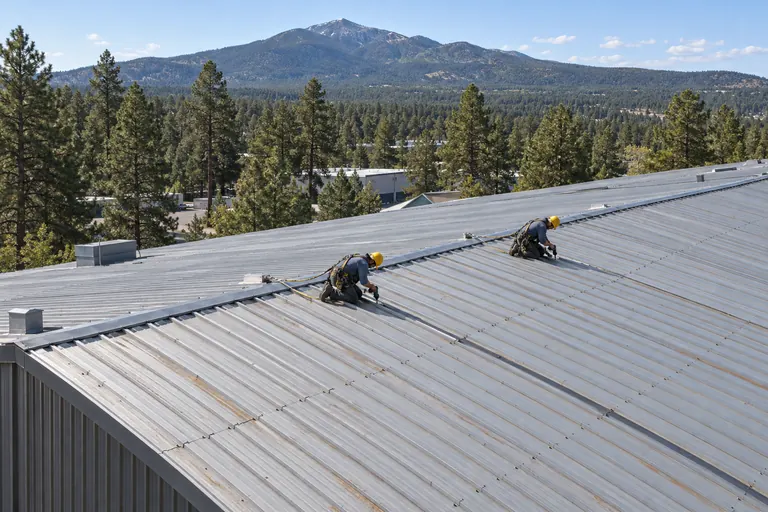
Commercial Metal Roof Repair
Warehouses with metal panel roofs need fastener and lap work alongside the equipment repairs.
Commercial metal roof repair
Industrial roof repair in Flagstaff for plants and warehouses: membrane around exhaust stacks and process vents, curb flashing, walkway paths, and leaks over running equipment.
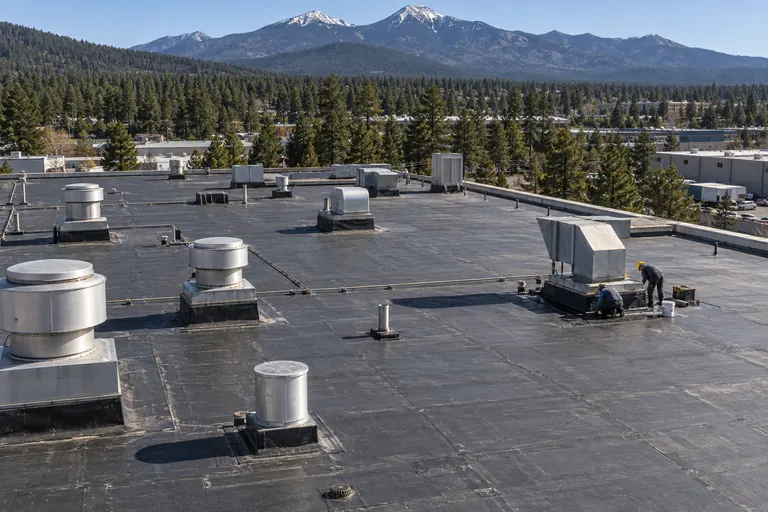
Industrial roofs take hard use, but most damage stays near equipment. Repair fits when it does.
Plant roofs carry more equipment and more traffic than most. These five zones see the hardest wear.
Heat, grease, and process residue from exhaust stacks soften and stain the membrane around them. Damaged sections are cut out and replaced with membrane suited to that exposure.
Heavy rooftop units and dust collectors vibrate their curbs, which loosens base flashing over time. Curb flashing is rebuilt and fastened with the unit locked out.
Every trip to a fan or filter crosses the same membrane. Punctures from dropped tools and loose screws are patched, and walkway pads go down along the worn path.
Skylights and roof hatches over production areas leak at their curbs and frames. Repairs here are timed so nothing drops onto lines or stock below.
Corrosive exhaust and long-running leaks damage the deck near outlets. Core cuts show the condition before a section is opened and rebuilt.
Repairs are matched to the equipment and the production schedule.
| Repair | What It Fixes | Timing |
|---|---|---|
| Outlet section repair | Softened or stained membrane at stacks | Planned fan shutdown; warm weather for large areas |
| Curb flashing rebuild | Loose flashing at units and collectors | Equipment lockout window |
| Puncture patching | Holes along service paths | Any dry day |
| Walkway pads | New punctures on routes to equipment | Installed with nearby repairs |
Leaks over production cost more than the roof work. Early repairs protect these.
A drip over a line, panel, or finished stock can stop work below. Fixing the opening before the next storm keeps the floor running.
Water entering at a curb can rust unit bases and support frames. Tight curb flashing protects the equipment as well as the building.
Wide industrial bays let water travel far under the membrane. Early repairs keep the wet area from spreading across many feet of insulation.
Walkway pads added with a repair protect the membrane on every later service visit, which cuts the number of new holes each year.
Call and tell us what sits under the drip and when the line runs. Work is planned around that schedule.
Industrial repairs depend as much on the plant schedule as on the roof.
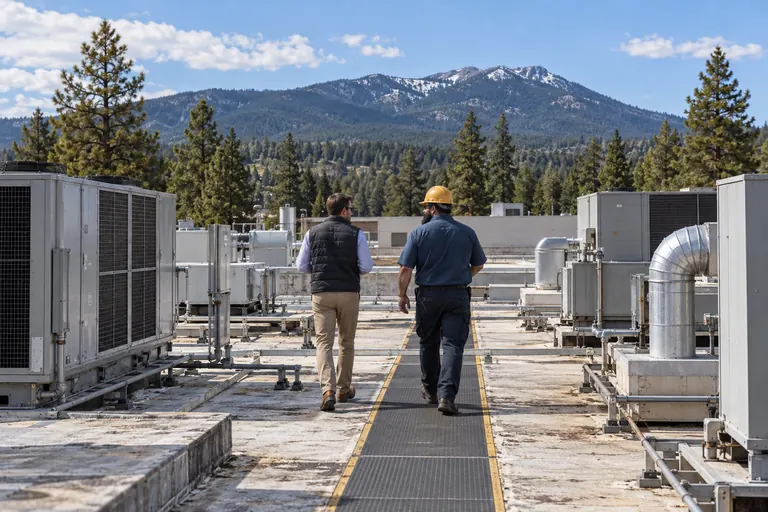
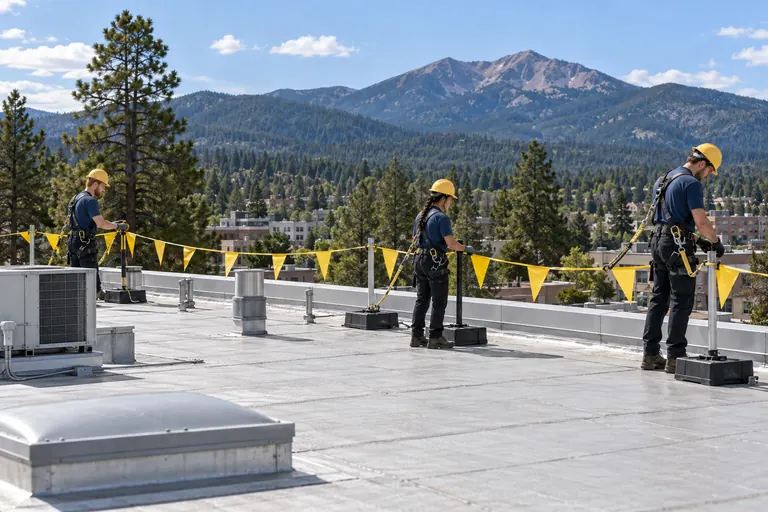
Outlets, curbs, skylights, and service paths are walked with the maintenance lead, and each damaged area is photographed and marked on a roof plan for the plant.
We agree on which exhaust fans and units shut down, when, and for how long, plus which bays can take noise during a shift.
Material staging and roof access are set so deliveries and trucks keep moving, with a lift or hoist placed away from loading doors.
Each zone is opened, repaired, and closed before the next one starts, so no area sits open if weather turns or a fan has to restart.
Walkway pads go down along the service routes, and loose screws and debris left by trades are cleared from the roof before the crew leaves.
Plant roofs often need these two services as well.
Warehouses with metal panel roofs need fastener and lap work alongside the equipment repairs.
Commercial metal roof repair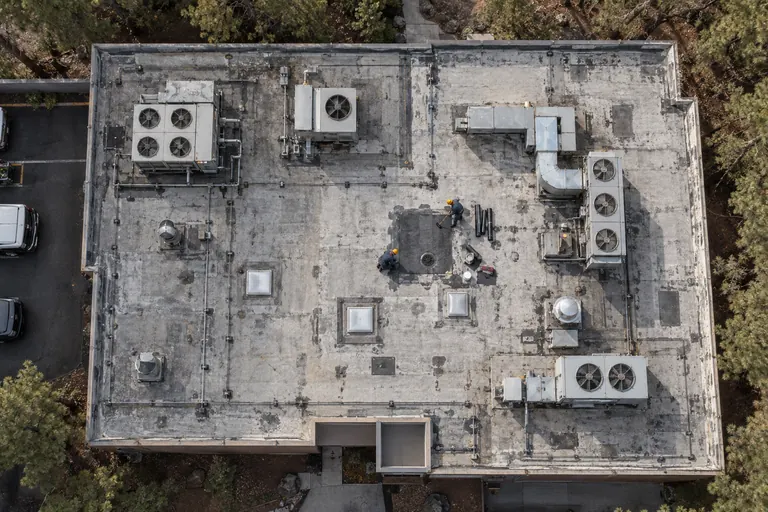
Low-slope membrane areas away from equipment get the same seam, drain, and parapet repairs as any flat roof.
Flat roof repair in FlagstaffAnswers about repairs around stacks, units, and production schedules.
In most cases, yes. Work is sequenced around the plant: exhaust fans near the crew shut down in planned windows, materials reach the roof without blocking docks, and noisy work avoids sensitive bays during a shift. Walkway pads along service routes cut future punctures.
The fan is locked out by plant staff before anyone works within reach of the discharge. Residue around the stack is cleaned off, softened membrane is cut out, and the new section uses material suited to the heat and exposure at that outlet.
For the first walk, it helps. They know which units run when, where trades have worked recently, and which leaks matter most to production. After that, a contact for shutdowns and access is usually enough.
That depends on the plant and the weather. Some work, like flashing at a fan that stops only on weekends, follows the equipment schedule; lighting and safety for night work are planned case by case.
Dropped tools, loose screws from service panels, and heavy foot traffic on the same paths. Ask contractors to close panel covers and pick up screws, and keep traffic on walkway pads.
They are. A leaking or cracked skylight drips directly onto lines or stock, and a weak panel is a fall hazard during roof work. Skylights get screens or covers while crews work nearby.
Call us and protect what sits below: shut down equipment under the drip if it is safe, cover it, and move stock. A temporary seal on the roof can slow the water while the cause is traced and the repair is planned around production.
Mostly. Warehouses have fewer process vents, but long bays, dock traffic, and stored goods under the roof bring the same need for zone-by-zone work and clear access.
Tell us what equipment sits on the roof and what runs below. We plan the repair around both.