Commercial Roof Leak Repair
When the stain sits far from any obvious opening, leak repair traces the water along the deck before the flat roof patch goes in.
Commercial roof leak repair
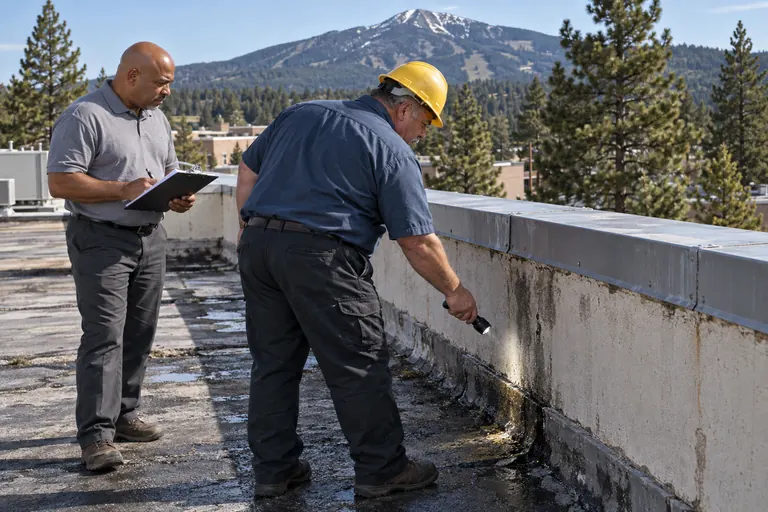
We handle flat roof repair in Flagstaff where membranes fail first: lifted seams, iced drains and scuppers, loose curb flashing, open parapet joints, and split pipe boots.
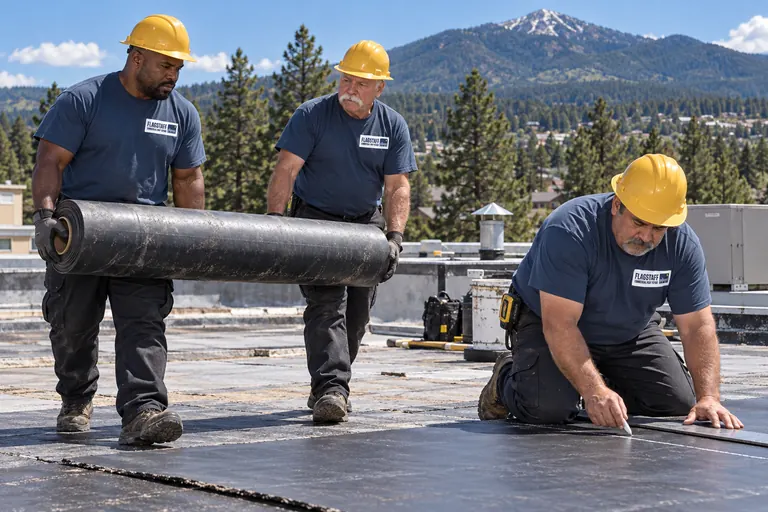
Most flat roofs in Flagstaff can be repaired at the joints. The exceptions have water spread through the insulation or a failing deck.
On a low-slope membrane the open field rarely fails first. These five zones are where flat roof work in Flagstaff begins.
Coping caps loosen and the base flashing behind them cracks as walls move through freeze-thaw. We reset caps, reseal joints, and rebuild the wall flashing where it has pulled away from the membrane.
Heat-welded TPO laps, taped EPDM seams, and built-up laps each fail differently. Every suspect seam is probed, and lifted sections are cleaned and patched with the same membrane type.
A frozen drain sends meltwater back under the nearest lap. Clamping rings get reset or replaced, strainers go back on, and pine needles are cleared so the bowl drains freely again.
Rooftop unit curbs take boot traffic from every service call. Loose base flashing is re-adhered or replaced, and pipe boots and pitch pans with split sealant are resealed or swapped.
Readings around each leak show whether the boards underneath are wet. Wet boards are cut out back to dry edges and replaced before the new patch goes over them.
The right repair depends on the membrane and how far water traveled. Some work fits a winter visit; some waits for warm weather.
| Repair | What It Fixes | Season |
|---|---|---|
| Seam patch or reweld | Lifted or split laps on TPO, EPDM, or mod bit | Winter with cold-rated products; long runs in spring |
| Flashing rebuild | Loose base flashing at curbs, walls, and skylights | Most of the year on dry days |
| Drain reset | Cracked clamping rings, missing strainers, packed bowls | Any season once ice is cleared |
| Wet section replacement | Soaked insulation and membrane around a leak | Warm, dry stretches |
Flat roof leaks grow sideways under the membrane. Closing them early keeps these parts of the roof working.
Boards that stay dry keep insulating the building. A leak left through one winter can soak a whole bay of insulation, which turns a patch into a section replacement.
Steel decks rust and wood decks rot where water sits on them for months. An early repair keeps the deck strong enough to carry the next layer of roofing.
A drain cleared and reset before winter moves meltwater off the roof. Without it, ponding rings form and wear out the membrane around them faster.
Patches hold longest on membrane that still has life left. Fixing seams while the sheet is flexible gives each repair a better bond and a longer run.
Call and tell us which drain and how long it has been ponding. Clearing it and a temporary seal can slow the backup while the repair is planned.
Each flat roof repair follows the same order, with roof work in the top lane and building work below.
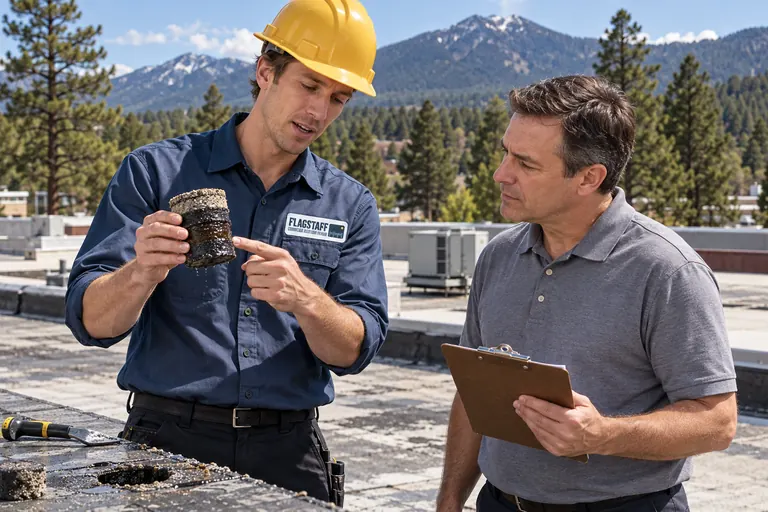
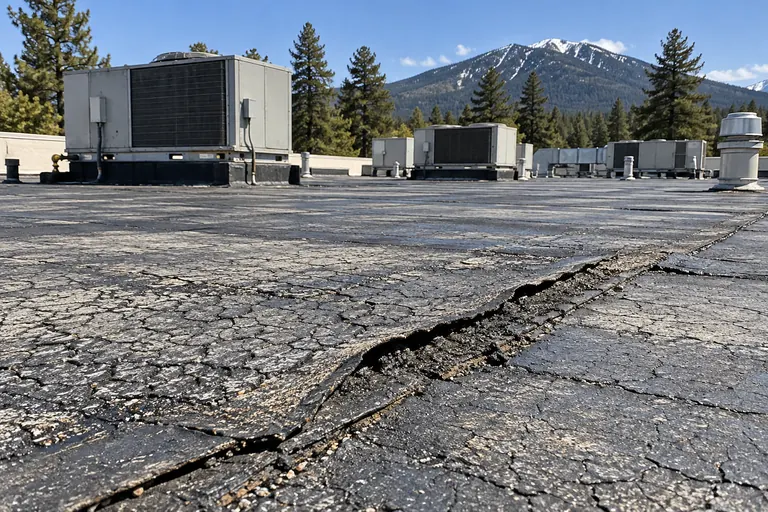
Every seam, drain, curb, and parapet on the membrane gets checked, with moisture readings around stains and blisters. Snow is cleared off the areas that need a close look.
Ceiling stains and wet tiles inside are marked on a roof sketch, so each one lines up with the seam, drain, or curb directly above it.
Wet insulation around the leak is cut out to dry edges, the deck is checked for rust or rot, and new boards go in flush with the old ones.
The repair uses the same membrane as the roof: welded TPO, taped EPDM, or torched or cold-applied modified bitumen, lapped well past the damaged area.
Photos of each repaired spot go to the building manager, with a note on anything to watch, such as a drain that collects needles every fall.
Flat roof work often overlaps with these two services.
When the stain sits far from any obvious opening, leak repair traces the water along the deck before the flat roof patch goes in.
Commercial roof leak repair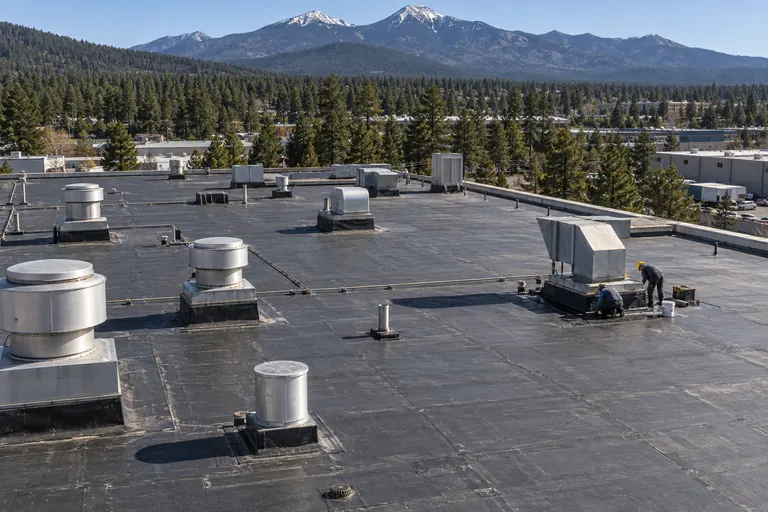
Plant roofs add exhaust outlets and process vents to the usual seams and drains, so repairs are planned around fan shutdowns.
Industrial roof repairAnswers about membranes, drains, and timing on Flagstaff flat roofs.
At the joints and edges, where the membrane meets something else. Seams lifted by freeze-thaw, drains held shut by ice and pine needles, curb flashing pulled by service traffic, open coping joints, and split boot sealant cause most leaks. Field punctures happen too, mostly along the paths to rooftop equipment.
No, and mixing them is a common reason patches fail. TPO is heat-welded to TPO, EPDM is joined with seam tape and primer made for EPDM, and modified bitumen gets modified bitumen. We identify the membrane before ordering material.
Trapped moisture or air between plies expands in the sun and lifts the surfacing. A blister that reads dry can be left and watched, while a cracked or wet one is cut out, dried, and patched before water reaches the insulation.
Ponding means water is staying in that area, and the cause decides the fix. A blocked or iced drain is cleared and reset; a sagging spot over wet insulation or a damaged deck needs a section repair. Rings that linger for days after a storm deserve an inspection.
By clearing needles before the first snow, keeping strainers in place, and checking that clamping rings are tight. Heat cable at drain bodies and added insulation around the drain sump help on roofs that ice up often.
It will match in material and closely in color, though new membrane looks cleaner than the weathered sheet around it. What matters is the bond: the patch extends past the damaged area onto solid membrane on every side.
Call us at (928) 430-5704. A temporary seal or a cleared drain can slow the water while the permanent flat roof repair is planned for a dry day.
Tell us the membrane type if you know it and where the stain is. The free inspection fills in the rest.